
Helping Children with Food Allergies Live Safer, More Confident Lives
At a Glance: Private Food Oral Immunotherapy (OIT) in London, UK
- What is OIT? Food Oral Immunotherapy (OIT) is a consultant-led dietary introduction programme. By gradually introducing small, carefully measured amounts of an allergen under specialist supervision, this approach helps build the body’s tolerance and significantly reduces the risk of severe reactions from accidental exposure.
- What we manage: We provide highly supervised, private dietary introduction programmes for peanut, tree nuts, milk, egg, and sesame.
- The CAD Difference: Overseen by Professor Helen Brough, internationally recognised for her holistic expertise in paediatric eczema and food allergies, our clinic offers highly personalised, empathetic care. Our consultant-led team provides a supportive, family-focused environment that understands the daily anxieties parents face.
- The Goal: To help your child live a freer, safer, and more confident life through tailored food allergy management.

Specialist, Consultant-Led Care for Food Allergy Management
At Children’s Allergy Doctors, we support families to move beyond avoidance alone through specialist approaches like oral immunotherapy. We provide expert, personalised care for children with food allergies in the UK.
In selected cases, this may include a carefully supervised, gradual introduction of allergenic foods, designed to support tolerance and reduce the risk of reactions from accidental exposure.
All care is individualised, evidence-informed, and delivered within a consultant-led multidisciplinary team, with safety and long-term outcomes at the heart of everything we do.
We understand how overwhelming food allergies can feel.
The constant worry about accidental exposure, reading every label, and navigating social situations can take a toll on the whole family.
Our role is to provide clear, expert guidance, helping you feel confident, supported, and in control, every step of the way.
Understanding Oral Immunotherapy (OIT)
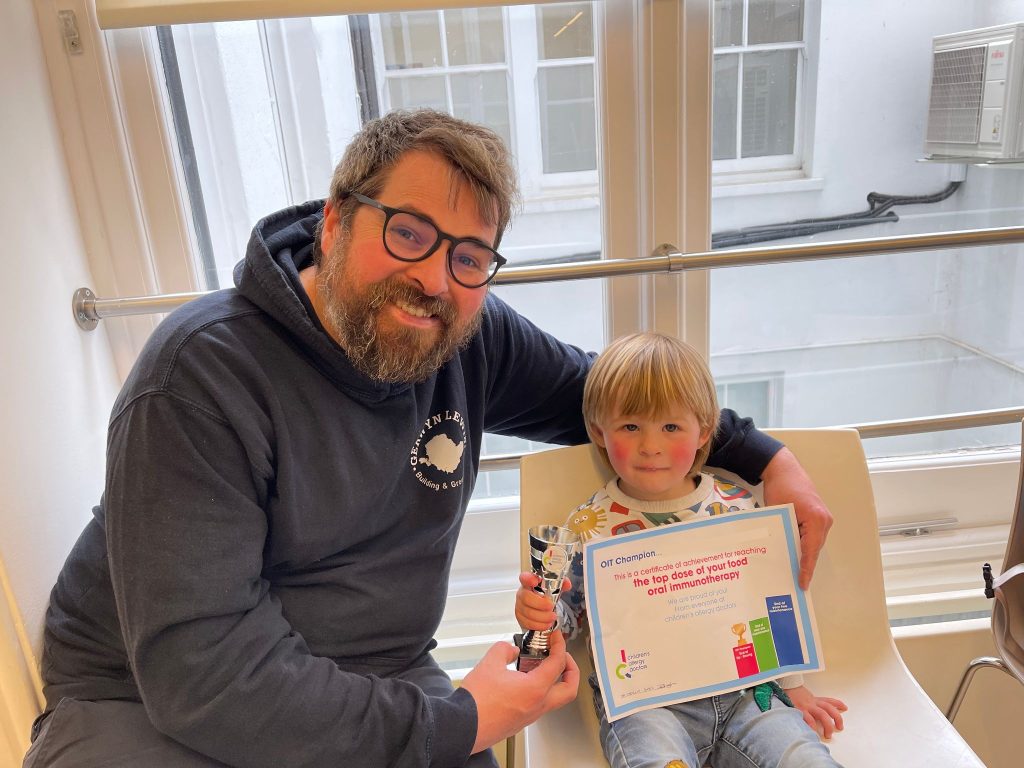
Oral immunotherapy (OIT), also known as food allergy desensitisation, is a term used to describe approaches involving the gradual introduction of allergenic foods under specialist supervision.
While terminology may vary, the focus is always on safe, personalised care, tailored to the needs of each individual child.
Why Families Choose Children’s Allergy Doctors
- Led by Dr Helen Brough, Consultant in Paediatric Allergy and Immunology and Professor at King’s College London.
- Extensive experience managing complex food allergies in infants and children.
- Multidisciplinary care including specialist nurses and paediatric dietitians.
- Strong focus on safety, communication, and family confidence.
- Evidence-informed care aligned with the latest research.
Our approach is designed not only to support clinical outcomes, but to help families feel confident, reassured, and in control.
What Does Oral Immunotherapy Involve?
For some children, avoidance alone may not be enough to provide reassurance or protection  from accidental exposure.
In selected cases, we may support a carefully supervised, gradual introduction of allergenic foods, starting with very small amounts and increasing over time. The programme uses real, everyday foods to promote tolerance naturally. Parents purchase these independently.
The aim is to:
- Support the development of tolerance.
- Reduce the risk of reactions following accidental exposure.
- Improve confidence and quality of life for both children and parents.
All care is individualised and closely monitored within a consultant-led multidisciplinary team.
A Personalised Approach to Oral Immunotherapy
Every child’s allergy journey is different.
Before considering this approach, we carry out a comprehensive clinical assessment, including:
- Detailed allergy history.
- Review of previous reactions.
- Consideration of other allergic conditions (such as eczema or asthma).
- Review of recent allergy test results.
Based on this, we develop a personalised care plan, tailored to your child’s needs and your family’s circumstances.
This approach is only recommended where it is safe, appropriate, and clinically beneficial.
Food Allergy Desensitisation: Allergens We Commonly Manage
We have extensive experience supporting children through food oral immunotherapy for a wide range of allergens. Our consultant-led clinic provides tailored management plans, including:
- Peanut desensitisation (We offer dedicated peanut immunotherapy programmes to safely build tolerance)
- Tree nuts (cashew, walnut, hazelnut, almond, Brazil nut, macadamia)
- Seeds (sesame, pumpkin seed, flaxseed / linseed, mustard seed)
- Legumes (green pea, yellow split pea, red lentil)
In selected cases, this food allergy desensitisation process includes the specialist-guided introduction of allergenic foods as part of an individualised care plan.
Early Introduction and Age Considerations
Oral immunotherapy is most commonly considered in younger children, with many starting before the age of 4 years.
Emerging research suggests that earlier introduction may be associated with improved safety and a higher likelihood of achieving sustained tolerance.
In selected cases, introduction may begin from around 6 months of age, depending on individual clinical assessment.
Additional Areas of Expertise
We also have particular expertise in supporting children with:
- Baked Egg
- Cow’s milk
- Wheat
For these allergies, carefully supervised introduction may be considered in selected children up to around 11 years of age, depending on individual clinical assessment.
Management approaches are tailored to each child, with a strong focus on safety and gradual progression.
Milk and Egg Allergy Management
Egg allergy often resolves naturally in childhood, although in some children it may persist.
Where a child is unable to tolerate baked egg during supervised challenge, we may offer a specialist-guided introduction of baked egg as part of a personalised allergy management plan.
Care is delivered within a consultant-led, multidisciplinary service, with ongoing review by the clinical team, including specialist nurses, to support safe and gradual progression.
Milk allergy can also persist in some children.
For suitable children, we may support a carefully supervised introduction of cow’s milk, beginning with very small amounts and gradually increasing over time.
This is delivered within a consultant-led, multidisciplinary setting, combining initial in-clinic supervision with supported progression at home, and regular review by the clinical team to ensure safety and individualised care.
Watch the interview below to hear a parent’s perspective on food oral immunotherapy:
Sublingual Immunotherapy (SLIT) for Older Children
For some children aged 5 years and above, sublingual immunotherapy (SLIT) may be considered as part of an individualised allergy management plan.
This approach involves placing very small amounts of allergen under the tongue, with progression carefully guided by the clinical team.
SLIT is generally well tolerated and may be associated with a lower risk of more significant reactions, particularly in older children.
Compared with other approaches, it may also be a more practical and flexible option for school-aged children, with fewer day-to-day restrictions.
Why Consider Early Intervention?
Historically, food allergy management focused on strict avoidance.
However, newer research suggests that early, carefully supervised introduction of allergenic foods may help modify the immune response in some children.
This may lead to:
- Improved tolerance.
- Reduced severity of reactions.
- Better long-term outcomes.
Oral Immunotherapy Evidence and Research
Peanut allergy affects approximately 1 in 50 children in the UK and is one of the leading causes of food-related anaphylaxis.
Strict avoidance can be difficult, with accidental reactions occurring in 7–14% of children each year.
Recent studies in young children have shown promising results when allergenic foods are introduced in a carefully controlled way.
The IMPACT study demonstrated that a significant proportion of young children were able to tolerate peanut after a period of gradual introduction, suggesting the potential for remission in some cases.
Our Clinical Approach to Oral Immunotherapy
Our care is delivered within a consultant-led multidisciplinary team, including specialist nurses and paediatric dietitians.
Care typically includes:
- Assessment: A detailed evaluation of your child’s allergy history and suitability.
- Personalised Planning: A tailored management plan designed around your child.
- Supervised Introduction: Initial introduction may take place in a controlled clinical setting.
- Supported Progression: Gradual increases are guided by the clinical team, with progression supported at home.
- Ongoing Review: Regular follow-up ensures safety and allows adjustments based on your child’s response.
Safety
Safety is central to everything we do.
Children are carefully assessed before starting, and families receive clear guidance on recognising and managing reactions.
Common symptoms may include:
- Abdominal discomfort
- Nausea or vomiting
- Itching (mouth or skin)
- Rash or hives
More significant reactions can occur and require prompt treatment.
All families are trained in the use of emergency medication and supported throughout.
Benefits of Oral Immunotherapy for Families
Many families report meaningful improvements in daily life, including:
- Reduced anxiety around accidental exposure
- Greater confidence in social situations
- Increased dietary flexibility
- Improved overall quality of life
Ongoing Support
We provide comprehensive support throughout your child’s care, including:
- Regular clinic reviews
- Specialist dietetic guidance
- Access to our nursing team phone-line
- Practical day-to-day advice
- 7-day a week email contact for clinical advice
We are here to support your family every step of the way.

Consultant-Led Personalised Allergy Oral Immunotherapy Care
Suitability for this approach is discussed during your child’s consultation.
This comprehensive service reflects the specialist, multidisciplinary care provided, including:
- Consultant oversight
- Specialist nursing and dietetic support
- Clinical review appointments
- Ongoing guidance and communication
Fees
- Suitability & Education Appointment: £400 (of which £150 goes towards the dietary introduction programme if parents proceed)
- Care Management Fees:
- Single allergen: £5,250
- Two allergens: £9,500
- Three allergens: £12,000
- Four allergens: £14,500
Fees can be paid in three instalments. Food oral immunotherapy programmes are self-funded and are not usually covered by private medical insurance.
View our fees and insurance page here.

Follow-Up
We recommend ongoing follow-up to monitor progress and provide reassurance.
These reviews may include supervised assessment of tolerance and continued support for long-term management.
FAQs
What is food allergy desensitisation?
Food allergy desensitisation is a specialist approach that involves the gradual, carefully monitored introduction of an allergenic food into a child’s diet. Rather than simply avoiding the allergen, this consultant-led care aims to safely build the body’s tolerance over time, helping to protect children from severe allergic reactions in the event of accidental exposure.
At what age can dietary introduction be considered?
Early intervention can be highly beneficial, and dietary introduction is often considered for young children and infants following a thorough clinical assessment. Our specialist consultants assess each child individually to determine the safest and most appropriate age to begin careful dietary management based on their specific allergy profile.
What is the difference between avoidance and management?
Avoidance relies entirely on strict elimination of the allergen from a child’s environment, which can often cause anxiety for families. Management is a proactive, clinical approach that helps families move beyond avoidance alone. Through carefully monitored dietary introduction and specialist support, we aim to actively build tolerance and provide a safer, more confident daily life for your child.
How long does oral immunotherapy take?
Because we provide personalised, consultant-led care, timelines vary for every child. The approach involves the careful, gradual introduction of allergenic foods under medical supervision. For many families, this process of building tolerance takes several months to a few years. We continually monitor your child’s progress to ensure the safest and most supportive pace.
How much does oral immunotherapy cost?
Fees for food allergy management depend on your child’s individualised care plan and the number of allergens being safely introduced. Because this is a highly specialised, consultant-led approach requiring regular clinical monitoring, costs typically start from £6,000. We provide a fully transparent breakdown of all care management fees following your initial consultation. You can view our full fee guide here.
Is oral immunotherapy covered by insurance?
Initial allergy consultations and standard diagnostics are often covered by major UK health insurance providers. However, ongoing specialist management and prolonged clinical supervision for food allergy desensitisation may not always be covered in full. We recommend checking directly with your insurance provider, and our team is always happy to provide the necessary clinical codes to help you verify your coverage.
Real Outcomes from Our Clinical Experience
We have extensive experience supporting young children using specialist, individualised approaches for food allergies including peanut, tree nuts, sesame, milk, and egg.
 Safety

Care was delivered within a closely supervised, consultant-led setting, with a strong focus on safety and careful progression.
Since starting in March 2022, we have delivered food oral immunotherapy to over 150 children. No child experienced anaphylaxis or required rescue adrenaline or hospital admission as a result of reactions due to their oral immunotherapy dose (as of 10 September 2026).
Progress
Most children were able to successfully increase their tolerance to allergenic foods over time, with a substantial proportion reaching a level that provided meaningful protection from accidental exposure.
Family Experience
Families reported:
- Greater confidence in managing their child’s allergy
- Reduced anxiety around accidental exposure
- Improved participation in everyday activities
Continuity of Care
Where children did not continue, this was most often due to:
- Intercurrent illness
- Family circumstances or relocation
Only a very small number stopped due to side effects, such as abdominal pain, throat clearing or throat irritation.
🌟 What This Means
Our experience reflects a safe, carefully guided, and individualised approach, focused on helping children live freer, safer, and more confident lives.

What Our Parents Say
“We have been seeing Professor Helen Brough and her team at Children’s Allergy Doctors now for 6 years and I could not recommend them more highly. They have always made me feel so confident with my son’s allergies and always respond so quickly if needed.”
“Since starting care with Professor Brough, we have seen amazing progress. Within a year, my daughter can now eat many foods that were previously unsafe for her… This has made a huge difference in her daily life and confidence. We are extremely grateful for the care, guidance, and expertise we have received.”
“We would highly recommend Professor Brough and the team… We’ve felt in safe hands throughout our years there, during which our daughter has successfully become desensitized to peanut, walnut, and cashew from initially fairly severe allergies.”
Private Oral Immunotherapy UK
While many parents search for a definitive “food allergy treatment,” it is important to understand that OIT is a management strategy rather than a guaranteed cure. However, it is currently one of the most proactive ways to manage severe food allergies.
If you are looking for a specialist clinic providing oral immunotherapy in the UK, Children’s Allergy Doctors offers private, consultant-led care from our state-of-the-art medical facilities in central London.
Book Your Child’s Allergy Consultation
If you would like to discuss food immunotherapy for your child, our team would be happy to help. Contact us on 0203 146 7721 or email admin@childrensallergydoctors.com.